What to Do in the First Hour After a Houston Flood
Floodwater in a Houston home is not ordinary water. It is Category 3 water, which means it is heavily contaminated, and the first hour decides how much of your home and belongings can be saved. Here is the order to do things in, what to photograph, and when to call for help.
Floodwater in a Houston home is not ordinary water. It is Category 3 water, which means it is heavily contaminated, and the first hour decides how much of your home and belongings can be saved. Here is the order to do things in, what to photograph, and when to call for help.
Stay safe first: floodwater is Category 3 water
Floodwater that has come in from outside carries sewage, chemicals, fuel, and debris. Treat it as contaminated. Do not wade through it, do not let children or pets near it, and do not touch it with bare hands. If the water is near electrical outlets, appliances, or your breaker panel, do not enter the room at all. If you can reach the main breaker safely from a dry place, switch the power off. If you cannot, wait for help.
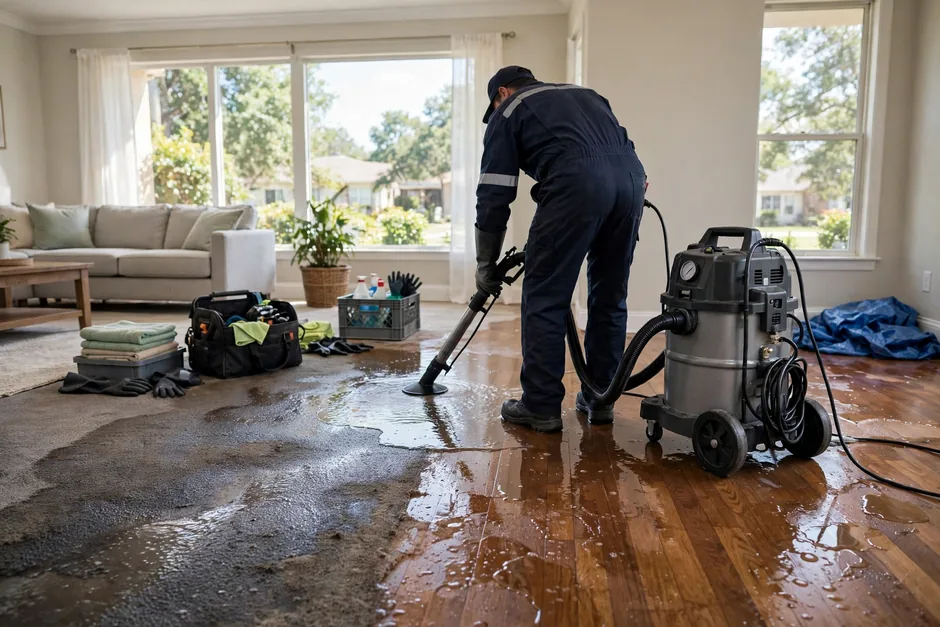
Do not try to run a household vacuum or a mop on floodwater, and do not use a fan to blow air across contaminated water. Our flood damage cleanup in Houston crews work in protective gear for a reason, and the same caution applies to you.
Stop more water coming in if you can do it safely
Once you are safe, stop the source if the cause is inside the house, such as a failed supply line. The main water shutoff is usually near the street, in a garage, or where the line enters the home. If the water is rising from outside, from a bayou, a street, or a storm drain, there is nothing safe to shut off. Move to dry ground and wait.
Houston's flat ground and clay soil mean water that gets in tends to stay. It spreads under baseboards, into wall cavities, and under flooring. Stopping the source early is the single most useful thing you can do before professionals arrive. If the flooding came from a burst pipe rather than outside water, read our guide to burst pipe water damage in Houston for the shutoff steps.
Photograph everything before you move anything
Before you move furniture, lift rugs, or start clearing water, photograph and video the damage. Open the camera, walk the room slowly, and capture the water line on the walls, the affected rooms, damaged furniture, and any personal items. Photograph serial numbers on appliances. This record is what your adjuster and your restoration crew will work from.
Our water damage insurance claim assistance guidance is simple: document first, clean second. Keep a short written list of damaged items with approximate dates of purchase. Do not throw damaged items away until your insurer has seen them or agreed you can dispose of them. A standard homeowners policy generally excludes flood, and flood insurance is a separate policy, so keep your records organized for whichever policy applies.
Move what can be saved, and lift what cannot be dried
Move dry furniture, rugs, electronics, and personal items to a dry room. Lift curtains off wet floors. Prop furniture legs on blocks or foil so they do not stain the carpet or wick up water. Open interior doors so air can move between rooms, but leave the wet rooms themselves for the extraction crew.
Do not pull up carpet yourself if the water is floodwater. Contaminated carpet and pad usually have to be removed and disposed of, and that is a job for a crew with protective equipment. What you can do is keep the dry things dry, because every dry item is one less loss.
Call for flood cleanup, and know what happens next
Call a restoration company once you are safe and the damage is documented. Emergency water extraction in Houston removes standing water first, then the crew checks walls, floors, and cavities with moisture meters to find water you cannot see. Flood cuts, the removal of the lower section of wet drywall, are common after floodwater, because contaminated water soaks into the bottom of the wall and cannot be cleaned in place.
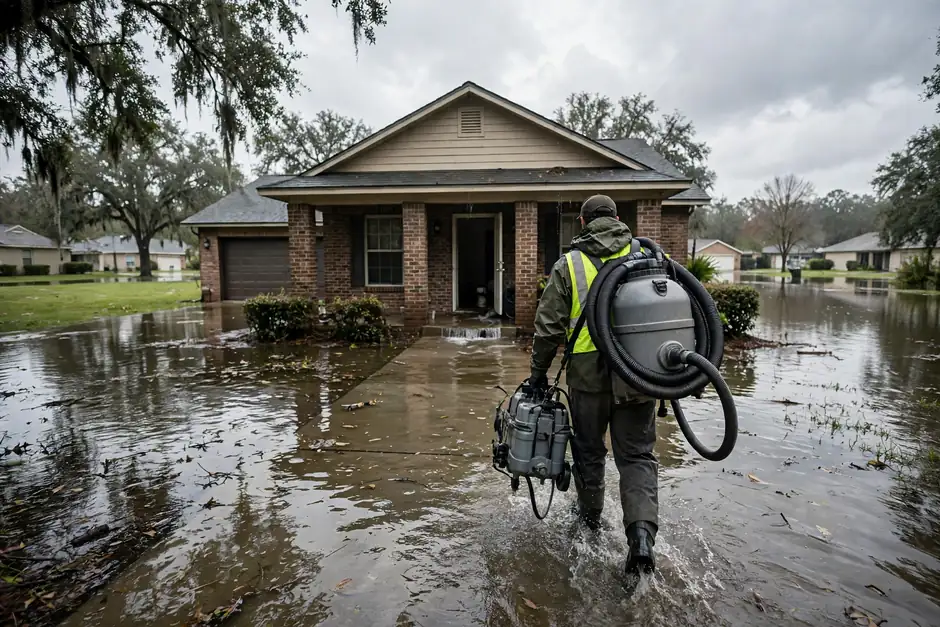
Floodwater usually arrives at ground level and spreads across slab floors and into the first few feet of the walls. In Meyerland, a neighborhood that has flooded repeatedly, and across the Memorial area, that pattern is familiar: the water line on the drywall tells the crew exactly how far the contamination reached.
Permits and repairs: one general rule worth knowing
Repair is different from mitigation. Mitigation is stopping further damage: extracting water, drying, and removing contaminated material. Repair is rebuilding to pre-damage condition, and repair in the floodplain can need a permit. As general information, the City of Houston Floodplain Management Office requires a floodplain development permit to start flood-damage repair if the property is in the floodplain and repair to pre-damage condition costs $10,000 or more. Check with the FMO for your address before repair work starts, and never rely on a general statement for a specific property.
You can check an address on the Harris County Flood Control District Flood Education Mapping Tool at harriscountyfemt.org. That tool tells you what the maps show for an address. It does not tell you a property is safe from flooding. Hurricane Harvey flooded 154,170 Harris County homes according to the Flood Control District's final count, and 68 percent of them were outside the 100-year floodplain. A map is a guide, not a guarantee.
Frequently Asked Questions
What should I do first when my Houston home floods?
Stay safe first. Floodwater is Category 3 contaminated water, so do not wade through it and keep children and pets away. Switch off power from a dry place if water is near electrics, then photograph the damage before moving anything, and call for flood cleanup help.
Is floodwater dangerous to touch?
Yes. Floodwater that has come in from outside can carry sewage, chemicals, and debris. Avoid contact with bare skin, do not use household vacuums or mops on it, and leave removal to a crew working in protective gear.
Do I need a permit to repair flood damage in Houston?
As general information, the City of Houston Floodplain Management Office requires a floodplain development permit to start flood-damage repair if the property is in the floodplain and repair to pre-damage condition costs $10,000 or more. Check with the FMO for your address before repair work starts.
Will my homeowners insurance cover flood damage?
As general information, a standard homeowners policy generally excludes flood, and flood insurance is a separate policy. Sudden and accidental water damage from inside the home is generally covered, while gradual damage generally is not. Check your own policy and keep full photo records of the loss.
What is a flood cut?
A flood cut is the removal of the lower section of water-damaged drywall, usually up to the height the floodwater reached. Floodwater contaminates the bottom of the wall, and the wet drywall and insulation behind it cannot be cleaned in place, so the section is removed and the cavity is dried before rebuilding. Houston homes rarely have basements, so floodwater usually arrives at ground level rather than filling a below-grade space.
Floodwater in your Houston home
Stay safe, document the damage, and call Restoration Enterprise at (346) 980-0009. We remove the water, find the hidden moisture, and dry the structure so rebuilding can start on solid ground.
Sources
Sources for the rules and figures cited in this guide.
- City of Houston — Chapter 19, Floodplain (PDF) — Houston's floodplain ordinance, including the permit rules for work in a floodplain.
- Harris County Flood Control District — Hurricane Harvey Report — the county's account of Harvey flooding in Harris County.
- Coyne Commercial Group — NFIP Proof of Loss: 60 Days — the 60-day proof-of-loss deadline for National Flood Insurance Program claims.