Focused arrival windows
Useful updates and clear arrival timing.
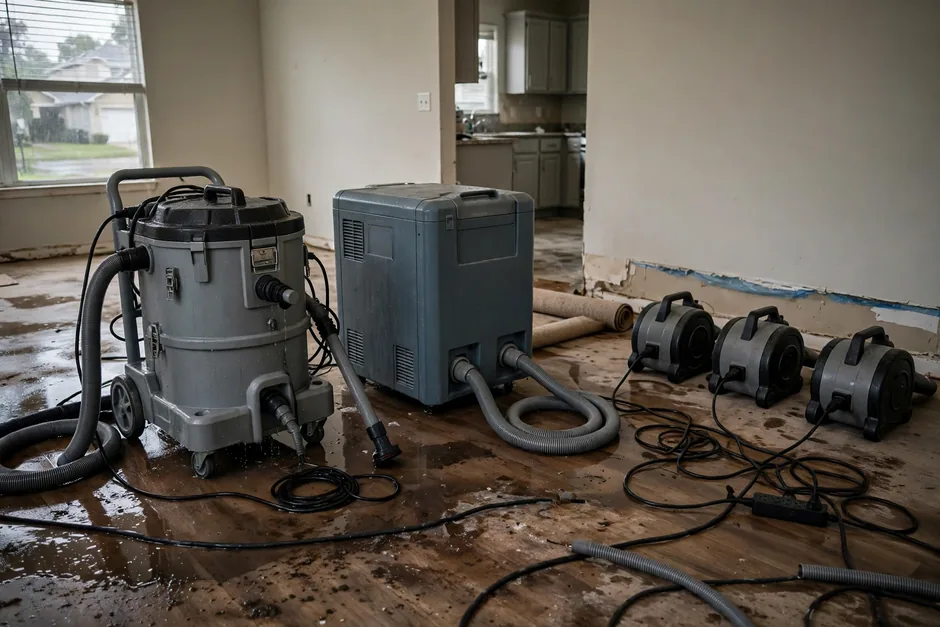
Structural drying Houston homes need after extraction is the scientific step: air movers placed to a plan, low-grain refrigerant dehumidification, moisture mapping and monitoring until readings reach dry standard. Restoration Enterprise dries walls, floors, slabs and cavities — and shows you the readings at every visit. Call (346) 980-0009 — open 24 hours.
Useful updates and clear arrival timing.
Review the approach and written scope before deciding.
Equipped vehicles and respectful cleanup.
Neighbors serving neighbors with follow-through.
Drying is a measured process, not a fixed number of days. Every step below is standard on a drying job in Houston. Repair is scoped only after the structure is dry.
We map every wet zone with a moisture meter and thermal imaging camera, including behind baseboards, under flooring and inside wall cavities.
Air movers are placed to the drying plan, directed at wet surfaces so moisture evaporates into the air where dehumidifiers can remove it.
Low-grain refrigerant dehumidifiers pull moisture from the air and keep humidity down while the structure dries — essential in Houston's humid climate.
Drying mats and directed airflow pull moisture from beneath hardwood flooring and from enclosed wall cavities. Deeply saturated hardwood, concrete, plaster or masonry needs Class 4 specialty drying.
Moisture readings are taken on each visit and logged, so the dry-down is documented rather than assumed.
You receive a drying report with the readings, for your records and for your insurance carrier.
Share what is happening and receive a clear next step from the local team.
Structural drying in Houston is the step after extraction: strategic air-mover placement, low-grain refrigerant dehumidification, moisture mapping and monitoring until the structure reaches dry standard. Extraction removes liquid water. Drying removes the moisture that remains in drywall, wood, concrete and masonry — the moisture you cannot see, and the moisture that causes the most damage if it is left in place.
The industry standard ANSI/IICRC S500 describes classes of damage by extent and absorption, including Class 4 specialty drying for deeply saturated hardwood, concrete, plaster or masonry. That class matters most in Houston, where slab-on-grade and masonry construction hold water far longer than drywall does — water sits in concrete and brick long after the surface looks dry. Drying time is never a fixed number of days: it depends on the water category, the class of damage, the materials involved, the size of the affected area and the humidity in the home. We give you readings, not a promised number of days.
Drying restores the structure; it does not repair the source of the water. A plumber repairs the pipe, a roofer repairs the roof, and foundation repair is a separate trade — we dry and restore the water damage those failures caused. Where the water-damage window has passed and mold is present, the job moves to mold assessment and remediation, with the Texas licensing rules applied. Drying is the middle of the chain: extraction, then drying, then mold assessment where needed, then repair.
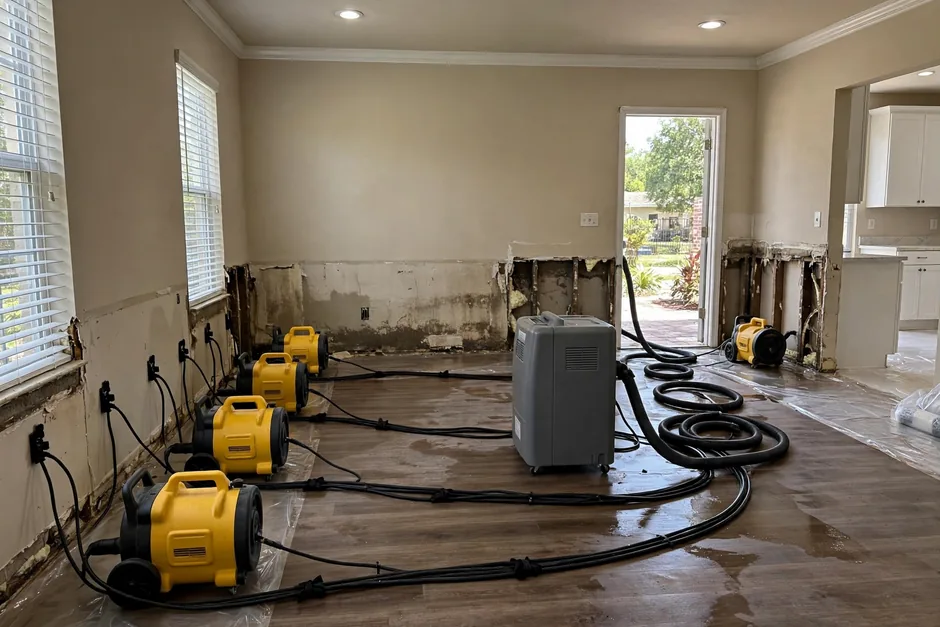
We map every wet zone with a moisture meter and thermal imaging, including behind baseboards, under flooring and inside cavities, and record the starting readings.
Air movers and dehumidifiers are placed to the drying plan — directed at wet surfaces, sized for the space and for Houston humidity.
Moisture readings are taken on each visit and logged. Equipment placement is adjusted where the readings show a slow spot.
If a cavity or a slab section is drying slowly, we add directed airflow or drying mats. The plan follows the readings.
Once readings reach dry standard, the equipment comes out and you receive the drying report. Repair is scoped from there, and mold is assessed where the window has passed.
Measures moisture in drywall, wood and concrete and tracks relative humidity, so we know when the structure has actually reached dry standard.
Finds temperature differences that reveal hidden moisture behind walls, under floors and above ceilings.
High-velocity air movers evaporate moisture from surfaces so dehumidifiers can remove it from the air.
Pull moisture from the air to low grain levels and keep humidity down while the structure dries.
Pull moisture from beneath hardwood flooring without lifting every board.
Directed airflow pulls moisture from enclosed wall cavities without full demolition.
Filters airborne particles during drying after Category 3 water and helps keep the rest of the home protected.
Affected areas are sealed off during drying after mold or Category 3 work, so dust does not migrate to clean rooms.
We map the moisture in the floor and slab, place drying mats and directed airflow, and monitor readings on each visit until the slab and subfloor reach dry standard. Repair is scoped only after drying.
We open the ceiling to inspect, dry the cavity and framing with directed airflow and dehumidification, and check readings before the ceiling is closed up again.
Extraction took the liquid water out. We place air movers and dehumidifiers to the drying plan, monitor the slab and lower walls, and log readings until dry standard is reached.
We map the wet ceiling and insulation, dry the cavity with directed airflow, and monitor readings until the structure is dry. The condensate line is a job for an HVAC technician; we dry the damage it caused.
Houston humidity is the enemy of drying. Moisture evaporates slowly when the air is already wet, which is why dehumidification matters as much as airflow here. Slab-on-grade and masonry construction hold water longer than drywall — water sits in concrete and brick long after the surface looks dry. And after a bayou flood, the drying job is bigger: whole ground floors, saturated slabs and wall cavities that need Class 4 specialty drying. Our drying plans are built for this climate and this housing stock, and they are measured in readings, not in promises.
Larger homes with masonry construction, where water sits in brick and plaster long after the surface looks dry.
Wooded streets and larger homes, where roof leaks and storm water can soak ceilings and wall cavities.
Homes near Brays Bayou where flood drying means whole ground floors, saturated slabs and Class 4 specialty drying.
Older pier-and-beam homes where water can sit under the floor and in crawl spaces before it shows inside.
Homes near the Gulf where storm water and roof leaks soak ceilings, insulation and masonry.
Apartment buildings where a leak in one unit can wet the walls and ceilings of the units below.
Hides moisture in the slab and under flooring. Drying a slab takes directed airflow and monitoring, not just a fan in the room.
Slows evaporation and makes dehumidification essential — air movers alone cannot dry a Houston home.
Drive the floods and roof leaks that create the biggest drying jobs in the city.
A slab leak soaked the hardwood floor in a River Oaks living room. The boards were cupping and the subfloor read high on the moisture meter. The plumber had already repaired the line.
We mapped the moisture in the floor and slab, placed drying mats and directed airflow, and monitored readings on each visit until the slab and subfloor reached dry standard.
Maintenance: We suggested the owner keep the moisture report with the plumbing invoice, for the insurance file.
A roof leak soaked the ceiling cavity in a Heights bedroom. The insulation was wet and the drywall was sagging. The roof had been repaired by a roofer.
We opened the ceiling to inspect, dried the cavity and framing with directed airflow and dehumidification, and checked readings before the ceiling was closed up again.
Maintenance: We recommended an attic check after heavy rain, to catch the next small leak early.
A ground floor flooded and was extracted, but the walls and slab were still wet. The lower drywall had been cut out and the framing sanitized.
We placed air movers and dehumidifiers to the drying plan, monitored the slab and lower walls on each visit, and logged readings until dry standard was reached.
Maintenance: We pointed the owner to the drying report for the insurance file, and to the FMO for any floodplain permit question before rebuild.
Most drying calls are moisture that extraction could not reach. The material decides the method. Here is how we handle the most common ones.
A slab holds water long after the surface looks dry. We map the moisture, place directed airflow and drying mats, and monitor readings until the slab reaches dry standard.
Water inside a wall cavity does not dry from the room side. We use directed airflow and cavity drying systems, and open the wall only where the readings say it is needed.
Cupping means the boards and the subfloor beneath are wet. We dry from below and above with mats and airflow, and monitor until the readings are level — repair is scoped only after drying.
After floodwater is extracted, the slab, lower walls and cavities still hold moisture. We dry them to documented readings, with containment and sanitizing already done as part of the flood job.
Our drying work follows the process described in ANSI/IICRC S500, the industry standard for professional water damage restoration — an industry standard, not law. Air-mover placement, low-grain refrigerant dehumidification, moisture mapping and monitoring are the protocol, and the readings are the verdict. We have dried slab leaks in River Oaks, storm-flooded ground floors in Meyerland, and pier-and-beam homes in the Heights, and every job ends with a drying report, not a guess.
Dealing with water damage is stressful, but Restoration Enterprise made the whole situation manageable. They were calm, knowledgeable, and reassuring from start to finish. I could finally breathe knowing my home was in good hands.
Exceptional Service Beyond Expectations! I am delighted to write this review for the highly professional and efficient water restoration company that turned our disaster into a blessing. When we discovered a serious plumbing issue in our kitchen, we were overwhelmed with anxiety and worry. However, the moment we reached out to them, they swiftly stepped in, assuaging our fears and promptly handling the situation. The thing that struck me the most about this company was their extraordinary customer service. They were not just professional, but also empathetic, understanding the stress we were under. They were quick to respond, arriving at our home within an hour of our call, fully equipped to deal with the situation. The cleanup process was swift and unobtrusive, causing minimal disruption to our daily routine. They even liaised with our insurance company, alleviating us from the added stress of handling paperwork. It's not often that you encounter a company so dedicated to their work and to the satisfaction of their clients. They turned an unfortunate event into a surprisingly positive experience. We are beyond pleased with the results and are grateful to have our kitchen back, in even better shape than before! If you are ever unfortunate enough to encounter a water disaster in your home, I wholeheartedly recommend this water restoration company. Their professionalism, efficiency, and dedication to customer satisfaction are second to none.
Rated 4.7 out of 5 from 152 Google reviews — 142 five-star reviews. The two reviews on this page are quoted verbatim from Google; the full set can be read on our Google profile.
There is no fixed number of days. Drying time depends on the water category, the class of damage, the materials involved, the size of the affected area and the humidity in the home. Deeply saturated hardwood, concrete or masonry — Class 4 specialty drying — takes longer than drywall. We give you moisture readings and a written scope after the assessment, not a promised number of days.
Dehumidification removes moisture from the air. Air movers evaporate moisture from wet surfaces into the air; without a dehumidifier to remove it, the moisture stays in the room and the surfaces never dry. In Houston's humid climate, dehumidification is essential, not optional.
Class 4 is the class of damage for deeply saturated hardwood, concrete, plaster or masonry — materials that hold water far longer than drywall. It needs directed airflow, drying mats and longer monitoring, and it is the class that matters most for Houston's slab and masonry construction.
Fans move air, but they do not remove moisture from it, and open windows in Houston bring humid air in. Professional drying pairs airflow with dehumidification and measures the result with a moisture meter. Small clean-water spills can sometimes be handled at home; Category 2 or 3 water and large wet areas need professional drying.
By the readings. We take moisture readings in the affected materials on each visit and compare them with dry-standard baselines for the same materials in unaffected areas. When the readings match, the structure is dry — and you receive the drying report to prove it.
Not seeing your question? Our local team can help you understand urgency, scheduling and what to expect.
Ask the local team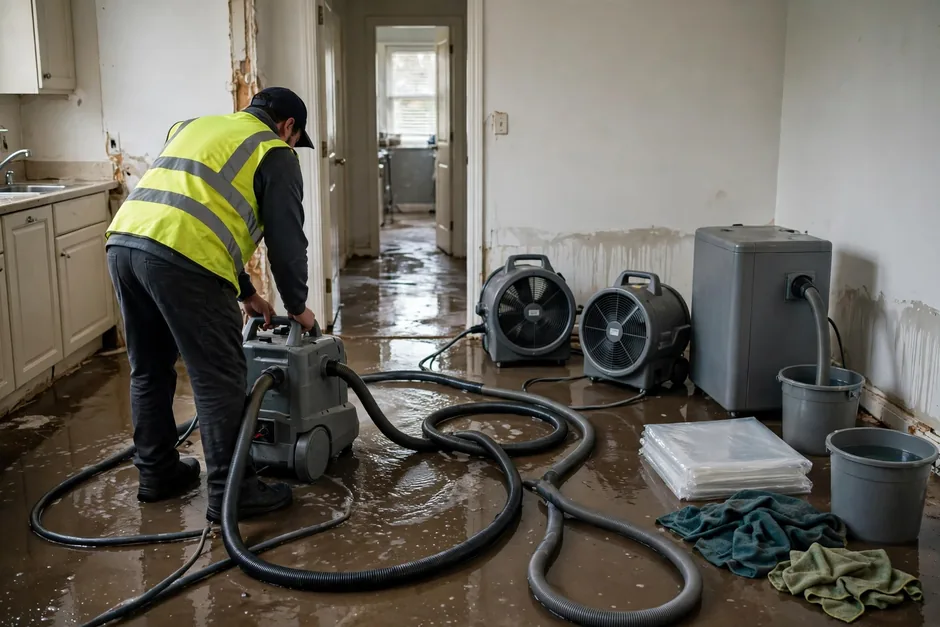
The flagship service: extraction, structural drying and repair for any water loss in Houston.
View service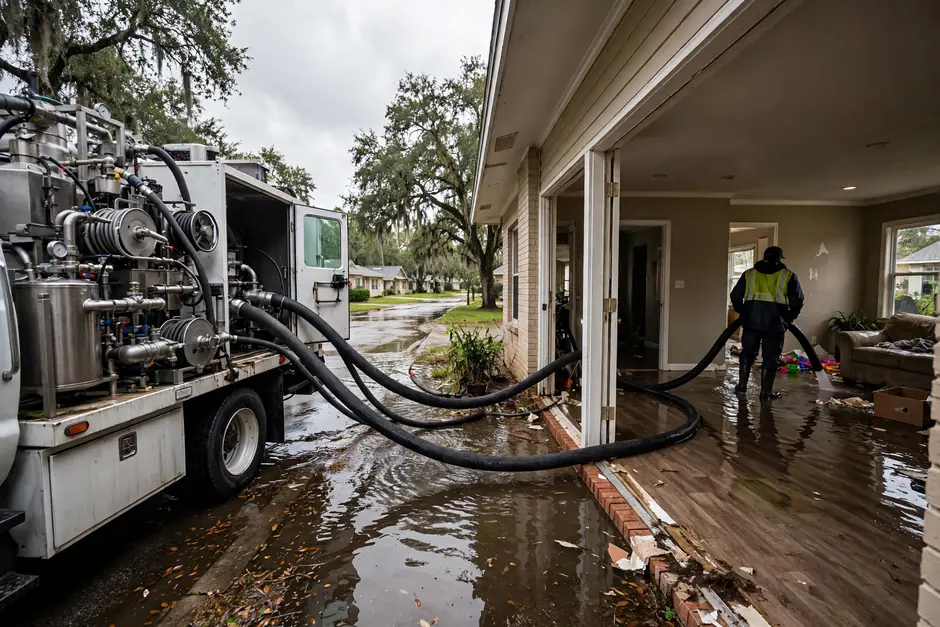
The step before drying: standing water comes out with truck-mounted extraction units.
View service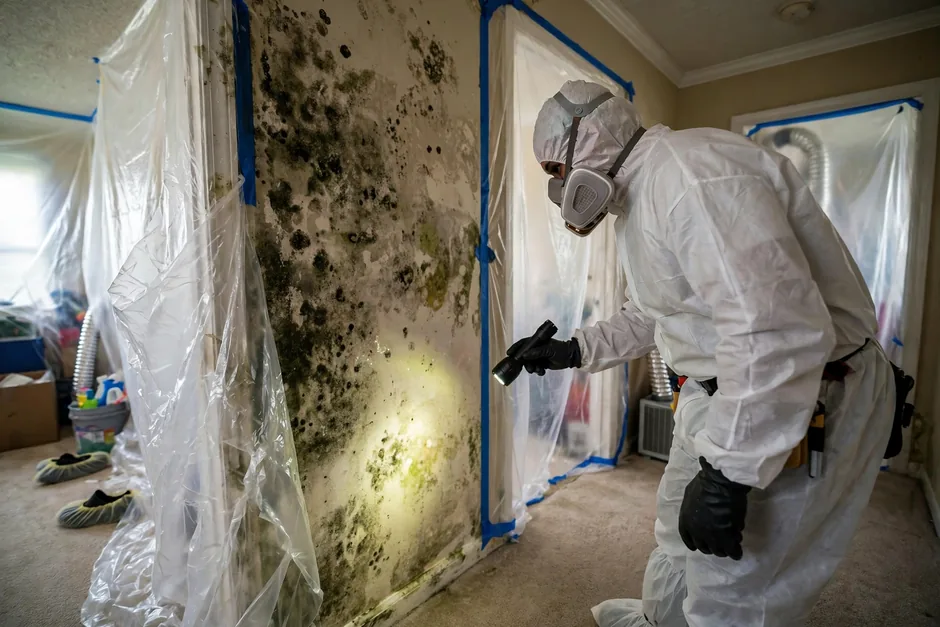
Where the water-damage window has passed, mold is assessed and remediated inside the Texas rules.
View service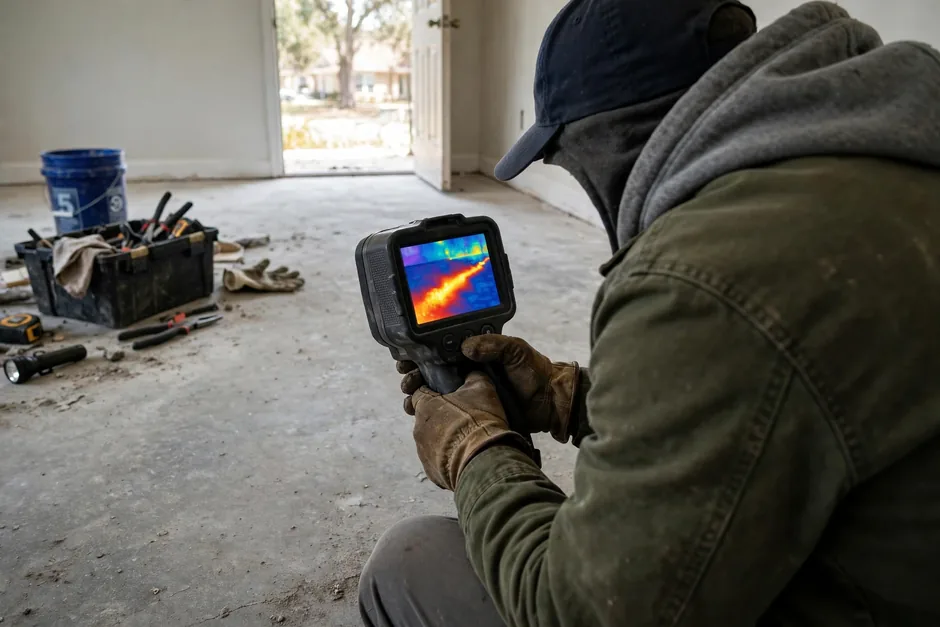
Slab leaks are a Houston priority — detection signs, water migration and drying of slab and flooring.
View serviceWe answer the phone around the clock, including weekends and holidays. Tell us what got wet and where, and we will give you a clear next step. Phone is our contact channel — call (346) 980-0009.