Focused arrival windows
Useful updates and clear arrival timing.
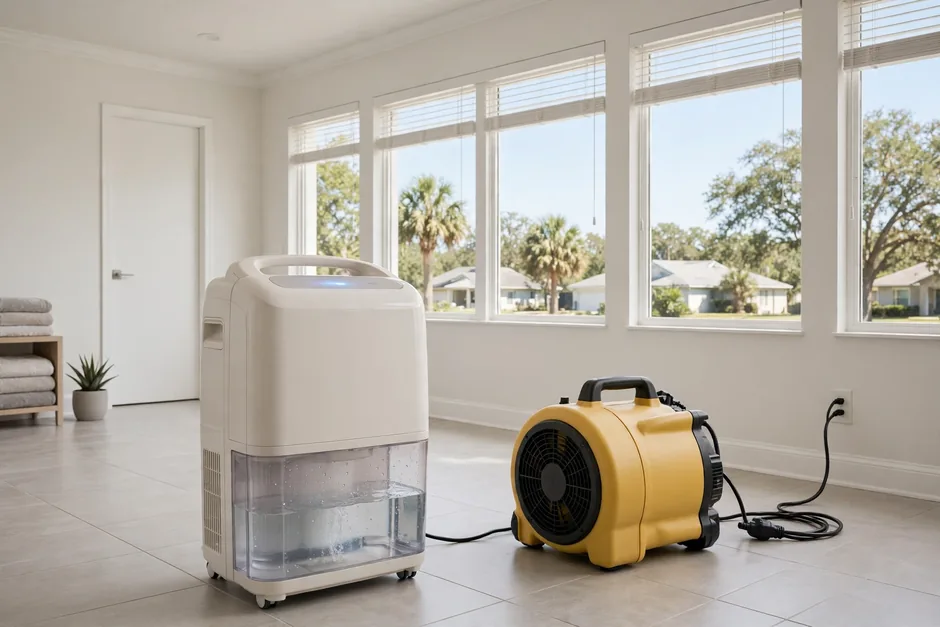
Mold remediation Houston homeowners need after a leak or flood starts with the water damage itself — find the moisture, dry the structure, then deal with the mold. Restoration Enterprise handles mold that follows water damage, and we work inside the Texas rules: mold remediation of 25 contiguous square feet or more requires a TDLR-licensed remediator, and the company that assesses the mold cannot remediate the same job. Call (346) 980-0009 — open 24 hours.
Useful updates and clear arrival timing.
Review the approach and written scope before deciding.
Equipped vehicles and respectful cleanup.
Neighbors serving neighbors with follow-through.
Mold follows water. Every step below is standard on a mold job that follows water damage in Houston. Assessment is done by a separate licensed assessor — we do not offer mold inspection or testing as a service.
Mold is dealt with after the water source is stopped and the structure is drying. Drying the structure is part of the remediation, not an afterthought.
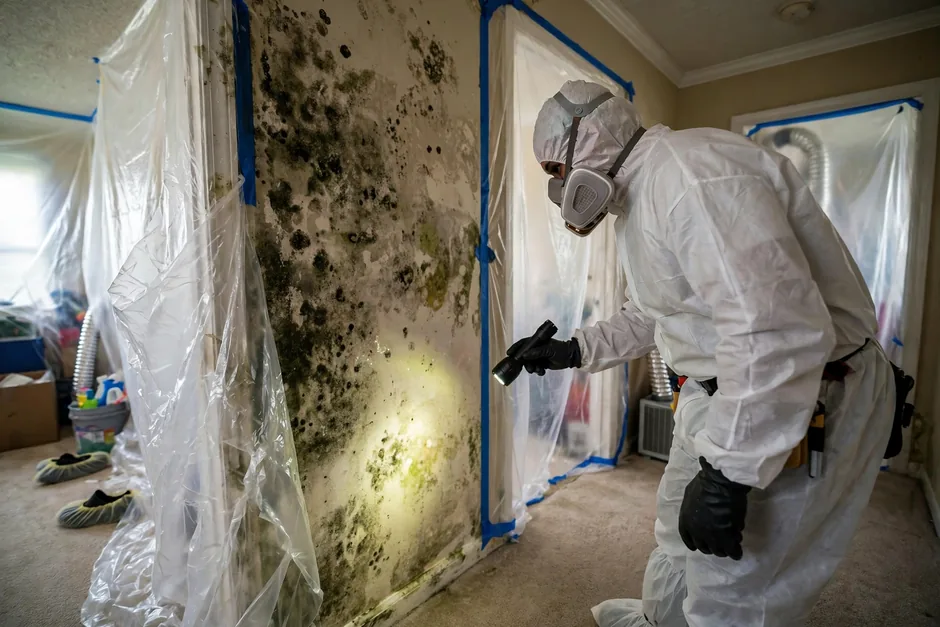
The affected area is sealed off with plastic sheeting and barriers, and negative air is used so dust does not travel to clean rooms while we work.
Drywall, insulation and other porous material with mold growth is removed, not painted over or covered up.
Exposed framing and hard surfaces are cleaned and sanitized after the affected material is out.
Moisture readings are taken after cleaning to confirm the structure is dry before any rebuild is scoped.
Mold assessment — inspection and testing — is a separate licensed activity in Texas. A separate licensed assessor writes the assessment protocol and carries out clearance. We do not offer inspection or testing.
Share what is happening and receive a clear next step from the local team.
Mold remediation in Houston after water damage means removing mold and mold-contaminated material that grew because something stayed wet. Houston's humidity and the 24-to-48-hour window in which mold can establish on wet drywall make this a natural follow-on to any water job that was not dried quickly. Remediation is the removal, cleaning and treatment of mold; assessment is the inspection and testing that identifies it. In Texas they are legally distinct activities, with separate licenses.
In Texas, mold remediation of 25 contiguous square feet or more requires a TDLR-licensed remediator, and the company that assesses the mold cannot remediate the same job. IICRC S500/S520 are industry standards, not law. That separation is a hard rule, not a best practice: the assessor writes the protocol, the remediator follows it, and the assessor carries out clearance afterwards. A licensed mold job carries a paper trail — an assessment protocol, a work plan, TDLR notification, clearance and a Certificate of Mold Damage Remediation. We do not claim to hold a TDLR mold license or IICRC credentials, and we do not offer mold inspection or testing as a service.
Mold remediation is restoration work, not plumbing, roofing or foundation repair. A plumber repairs the pipe, a roofer repairs the roof, and foundation repair is a separate trade — we restore the water damage and deal with the mold that followed it. We do not diagnose health effects or state a safe mold level, and there is no mold-free guarantee: no such guarantee exists in the Texas rules. If you have health concerns, talk to a medical professional.
You call (346) 980-0009 and tell us where the water was and what you are seeing. Mold assessment is done by a separate licensed assessor, who writes the assessment protocol — we do not offer inspection or testing.
The water source is stopped and the structure is dried with air movers and dehumidifiers, with moisture readings logged on each visit.
The affected area is sealed off, negative air is set, and drywall, insulation and other porous material with mold growth is removed.
Exposed framing and hard surfaces are cleaned and sanitized, and moisture readings are taken to confirm the structure is dry.
Clearance is carried out by the assessor, not by the remediator. Once clearance is done, damaged drywall, insulation and trim are replaced as scoped.
Measures moisture in drywall, wood and concrete and tracks relative humidity, so we know the structure is dry before rebuild.
Finds temperature differences that reveal hidden moisture behind walls, under floors and above ceilings — the moisture mold needs to grow.
Affected areas are sealed off with plastic sheeting and barriers so dust does not migrate to clean rooms.
Filters airborne particles and maintains containment pressure during mold remediation.
Our crew wears protective equipment appropriate to the job, including respirators and gloves, when working in a contained area.
Exposed framing and hard surfaces are cleaned and sanitized after the affected material is removed.
High-velocity air movers evaporate moisture from surfaces so dehumidifiers can remove it from the air.
Low-grain refrigerant dehumidifiers pull moisture from the air and keep humidity down while the structure dries.
The roof is repaired by a roofer first. A separate licensed assessor writes the protocol, we contain the room, remove the affected drywall and insulation, clean and sanitize the framing, and dry the cavity before any rebuild is scoped.
Floodwater is Category 3, so the porous material it touched was already removed. Where mold has established on what remains, we contain the area, remove the affected material, clean the framing and verify drying — with assessment and clearance by a separate licensed assessor.
We stop the water, dry the wall cavity, and contain the bathroom while the affected drywall and baseboard are removed and the framing is cleaned and sanitized. The pipe repair is a plumber's job; we restore the damage.
Thermal imaging and a moisture meter map the wet cavity. The wall is opened, the affected material is removed under containment, the framing is cleaned, and the cavity is dried and verified before it is closed up.
Houston is a mold-friendly city: high humidity, warm temperatures and a housing stock full of slab-on-grade homes, pier-and-beam bungalows and attic air handlers. A slow leak behind a wall can stay wet for weeks before anyone sees it, and a flooded ground floor can grow mold within 48 hours. That is why our mold work always starts with the water — find it, stop it, dry it — and why the Texas rules matter: assessment and remediation are separate, licensed activities, and the company that assesses the mold cannot remediate the same job.
Older bungalows, many pier-and-beam, where a slow leak can stay wet under the floor and in crawl spaces before it shows inside.
Bungalows and townhomes where a leak behind a shared wall can grow mold before either side notices it.
Homes near Brays Bayou where floodwater has left mold on lower walls after past floods.
Slab-on-grade ranch homes where a slab leak can wet a wall cavity for weeks before it is found.
Apartment buildings where a leak in one unit can grow mold in the walls and ceilings of the units below.
Larger homes with several HVAC systems, where a condensate overflow can wet ceilings and wall cavities.
Lets mold establish on wet drywall within 24 to 48 hours, so drying quickly after a leak matters more here than in drier climates.
Drive the floods and roof leaks that create the biggest mold jobs in the city.
Hides moisture in wall cavities and under flooring, which is why thermal imaging and moisture meters are standard on every assessment.
A slow roof leak left mold growing on the drywall in a Heights bedroom. The stain had been spreading for weeks, and the insulation above it was wet.
The roof was repaired by a roofer. A separate licensed assessor wrote the protocol; we contained the room, removed the affected drywall and insulation, cleaned and sanitized the framing, and dried the cavity before rebuild.
Maintenance: We suggested a roof inspection before storm season and an attic check after heavy rain.
A Meyerland home flooded, and mold appeared on the lower walls after the water was extracted. The water had been Category 3, so the porous material it touched was already out.
We contained the affected rooms, removed the material with mold growth, cleaned the framing, and verified drying with moisture readings. Assessment and clearance were done by a separate licensed assessor.
Maintenance: We pointed the owner to the HCFCD Flood Education Mapping Tool to check the address.
A bathroom supply leak soaked the wall behind the vanity, and mold was visible where the baseboard meets the floor. The pipe had already been repaired by a plumber.
We dried the wall cavity, contained the bathroom, removed the affected drywall and baseboard, and cleaned and sanitized the framing before the wall was rebuilt.
Maintenance: We recommended a leak sensor behind the vanity and under the sink.
Most mold calls follow a water loss that stayed wet too long. The location decides the approach. Here is how we handle the most common ones.
Drywall with mold growth is removed under containment, not painted over. The framing is cleaned and sanitized, and the cavity is dried and verified before rebuild.
Floodwater is Category 3, so porous material it touched is already removed. Mold on what remains is remediated under containment, with assessment and clearance by a separate licensed assessor.
Thermal imaging and a moisture meter map the wet cavity. The wall is opened, the affected material is removed, the framing is cleaned, and the cavity is dried before it is closed up.
A musty smell after a leak is a symptom, not a diagnosis. We map the moisture with a meter and thermal imaging to find where water is still sitting — assessment of the mold itself is done by a separate licensed assessor.
Our mold work follows the process described in ANSI/IICRC S520, the industry standard for professional mold remediation — an industry standard, not law. The Texas rules come first: mold remediation of 25 contiguous square feet or more requires a TDLR-licensed remediator, and the company that assesses the mold cannot remediate the same job. We work to the assessor's protocol, contain the area, remove what the protocol calls for, and verify the structure is dry.
Dealing with water damage is stressful, but Restoration Enterprise made the whole situation manageable. They were calm, knowledgeable, and reassuring from start to finish. I could finally breathe knowing my home was in good hands.
Exceptional Service Beyond Expectations! I am delighted to write this review for the highly professional and efficient water restoration company that turned our disaster into a blessing. When we discovered a serious plumbing issue in our kitchen, we were overwhelmed with anxiety and worry. However, the moment we reached out to them, they swiftly stepped in, assuaging our fears and promptly handling the situation. The thing that struck me the most about this company was their extraordinary customer service. They were not just professional, but also empathetic, understanding the stress we were under. They were quick to respond, arriving at our home within an hour of our call, fully equipped to deal with the situation. The cleanup process was swift and unobtrusive, causing minimal disruption to our daily routine. They even liaised with our insurance company, alleviating us from the added stress of handling paperwork. It's not often that you encounter a company so dedicated to their work and to the satisfaction of their clients. They turned an unfortunate event into a surprisingly positive experience. We are beyond pleased with the results and are grateful to have our kitchen back, in even better shape than before! If you are ever unfortunate enough to encounter a water disaster in your home, I wholeheartedly recommend this water restoration company. Their professionalism, efficiency, and dedication to customer satisfaction are second to none.
Rated 4.7 out of 5 from 152 Google reviews — 142 five-star reviews. The two reviews on this page are quoted verbatim from Google; the full set can be read on our Google profile.
In Texas, mold remediation of 25 contiguous square feet or more requires a TDLR-licensed remediator, and the company that assesses the mold cannot remediate the same job. IICRC S500/S520 are industry standards, not law. Mold assessment — inspection and testing — is a separate licensed activity, done by a separate licensed assessor.
No. Mold inspection and testing — mold assessment — is a separate licensed activity in Texas. Assessment is done by a separate licensed assessor, who writes the assessment protocol and carries out clearance. We do not offer inspection or testing as a service.
Yes. Mold can establish on wet drywall and wood within 24 to 48 hours in Houston's humid climate, and a slow leak behind a wall can stay wet for weeks before anyone sees it. That is why finding the moisture and drying the structure quickly matters — and why a leak that has been wet for a while needs assessment, not just a fan.
We do not diagnose health effects or state a safe mold level, and there is no mold-free guarantee in the Texas rules. Black mold is a color description, not a diagnosis of a specific mold or a health outcome. If you have health concerns, talk to a medical professional.
It depends on the area affected, the materials involved, how much has to be removed, and how long drying takes. Assessment, containment, removal, cleaning and clearance each take their own time. We give you a written scope after the assessment, not a promised number of days.
Not seeing your question? Our local team can help you understand urgency, scheduling and what to expect.
Ask the local team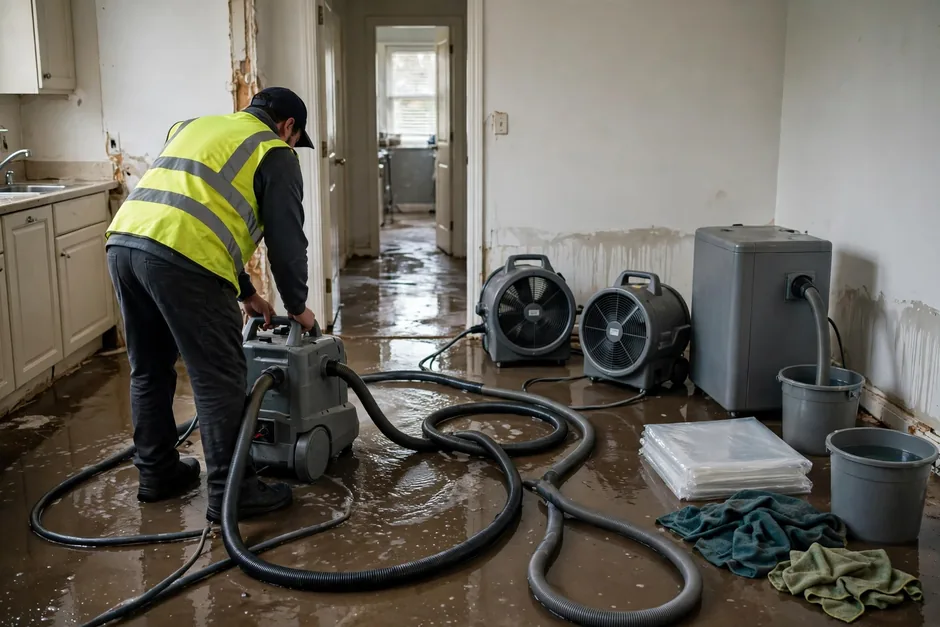
The flagship service: extraction, structural drying and repair for any water loss in Houston.
View service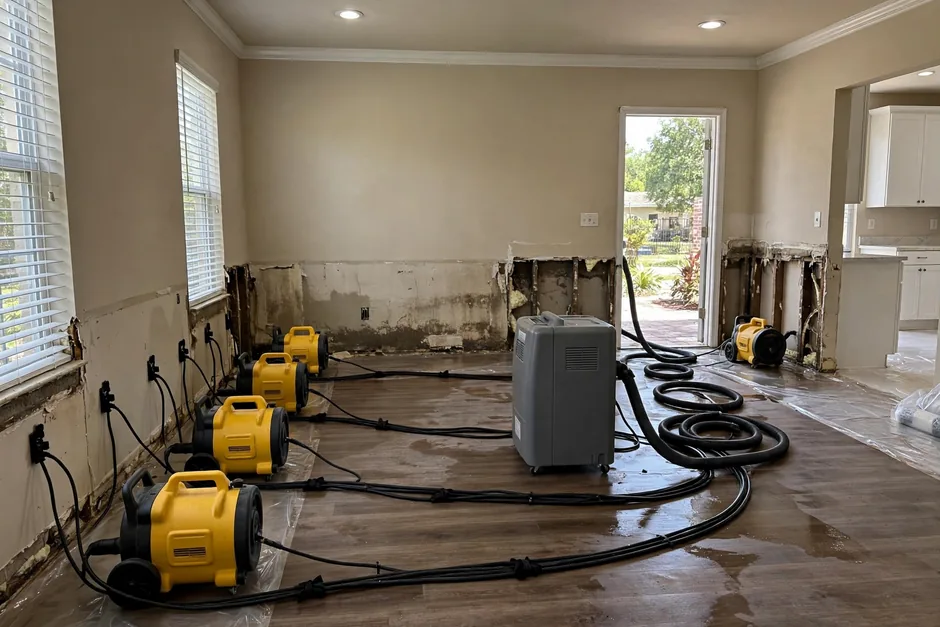
Drying comes first — mold is dealt with after the structure is drying and the source is stopped.
View service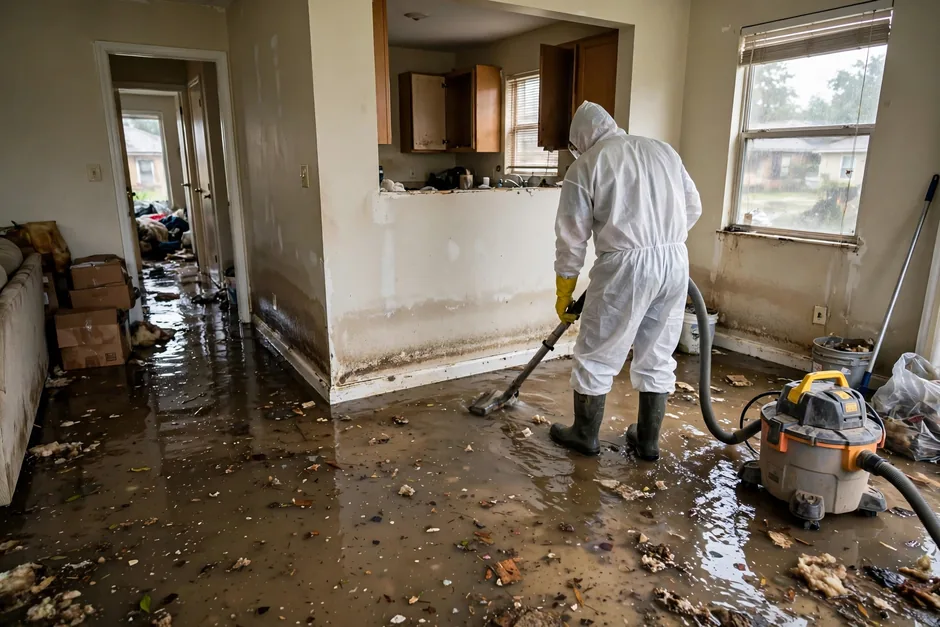
Floodwater is Category 3, and mold after a flood is remediated under the same Texas rules.
View service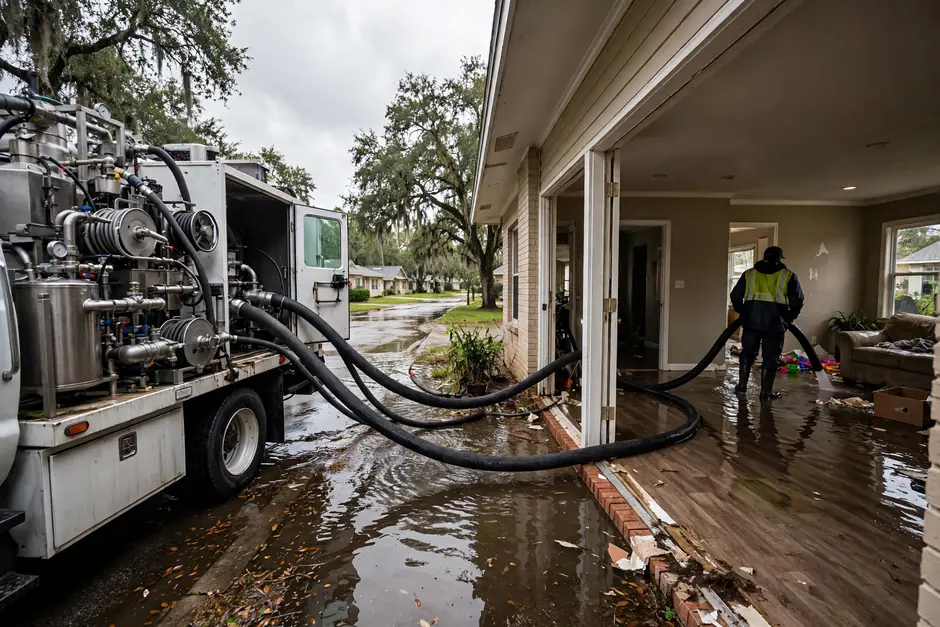
Standing water comes out first with truck-mounted extraction units, before mold can establish.
View serviceWe answer the phone around the clock, including weekends and holidays. Tell us where the water was and what you are seeing, and we will give you a clear next step. Phone is our contact channel — call (346) 980-0009.