How Much Does Mold Remediation Cost in Houston
Every Houston homeowner who finds mold after a leak asks the same question: what will remediation cost? There is no honest single answer, because no two jobs are alike. What this guide does give you is the full list of factors that decide the cost, so you can read a written quote and understand every line of it.
Every Houston homeowner who finds mold after a leak asks the same question: what will remediation cost? There is no honest single answer, because no two jobs are alike. What this guide does give you is the full list of factors that decide the cost, so you can read a written quote and understand every line of it.
The area affected matters more than anything else
The size of the affected area is the first factor in any mold remediation quote. A small patch behind a bathroom vanity and a whole wall of mold after a roof leak are different jobs in every way: more material to remove, more containment, more cleaning, and more drying. The area is measured in contiguous square feet, which matters in Texas because the licensing line is drawn the same way.
In Texas, mold remediation of 25 contiguous square feet or more requires a TDLR-licensed remediator, and the company that assesses the mold cannot remediate the same job. IICRC S500/S520 are industry standards, not law. That rule shapes how a job is scoped and who can legally perform it, and any written quote for a larger job should reflect it. Mold assessment, the inspection and testing that identifies mold and its extent, is a separate licensed activity from remediation, and the company that assesses the mold cannot remediate the same job.
What the mold is growing on changes the work
Mold on a hard, non-porous surface is a cleaning job. Mold in drywall, insulation, carpet pad, or particleboard is usually a removal job, because porous materials cannot be cleaned reliably once mold has grown into them. The material decides whether the crew is wiping, cutting, or replacing, and replacement adds material and rebuild costs on top of the remediation itself.
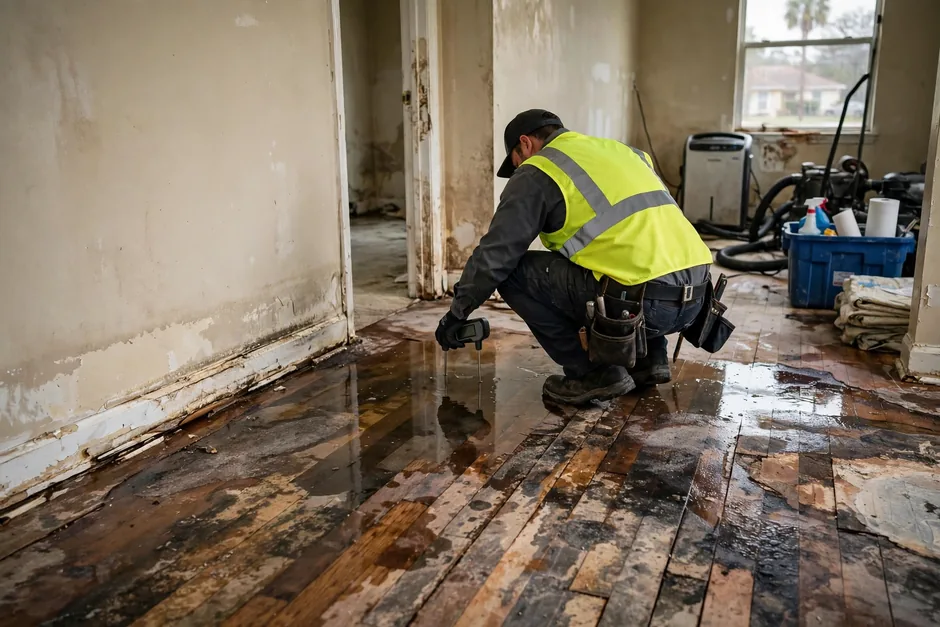
Houston's older homes add another layer. In Montrose and the Heights, plaster walls, older framing, and pier-and-beam construction can hide mold in places a newer slab home would not. A crew that only treats what it can see will miss the rest, which is why moisture mapping and a proper assessment protocol matter before any work starts.
Containment and access decide the labor
Containment is the barrier work that keeps mold from spreading through the house while remediation is under way: sealed doorways, negative air pressure, and careful handling of removed material. A contained job in one room costs less in labor than a job spread across several rooms or inside a tight attic or crawl space. Access matters too. A wall that can be opened from one side is a simpler job than mold behind built-in cabinetry or inside a ceiling cavity.
Our mold remediation in Houston work starts with the scope, not the spray bottle. The written scope should say which materials come out, which stay, how the area is contained, and how the job is verified when it is finished.
Drying and the water source come first
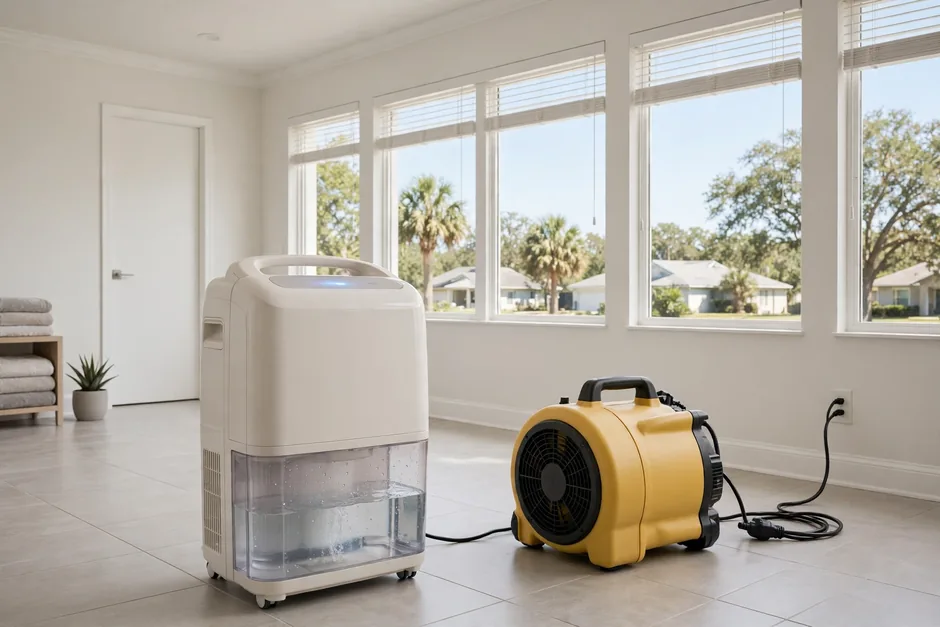
Mold remediation without fixing the water source is a job that has to be done twice. The leak, the roof failure, the plumbing fault, or the drainage problem has to be repaired by the right trade before or alongside remediation, and the structure has to be dried. Structural drying and dehumidification in Houston is often part of the same loss, and drying time depends on the materials, the amount of water, and Houston's humidity, so no honest quote promises a drying time in advance.
Plumbing repairs the pipe, roofing repairs the roof, and restoration deals with the water damage the failure caused. A quote that bundles everything into one vague line is a quote to question.
Clearance and paperwork are part of the cost
A licensed mold job carries a paper trail: an assessment protocol, a work plan, notification, clearance by the assessor after remediation, and the certificate records that follow. Clearance is the post-remediation check that the work met the protocol, and it is done by the assessor, not the remediator. That separation is the point of the Texas rule, and it is also what protects you if a future buyer or insurer asks what was done.
There is no safe level of mold in the Texas rules, and no honest company promises a mold-free home. What a good quote does promise is a defined scope, a licensed approach where the rules require it, and a clearance step that verifies the work.
How to read a mold remediation quote
Ask for the quote in writing before work starts, and check that it names the affected area, the materials to be removed or cleaned, the containment method, the drying step, and the clearance step. Ask who holds the TDLR license for the remediation, and who the separate assessor is. Ask what happens if the crew finds more mold once a wall is open.
If a quote cannot answer those questions, it is not a quote you can compare with anything. The lowest line on a page is not the lowest-cost job if the scope is missing. Our water damage restoration in Houston team puts the scope in writing first, because that is the only way you can tell what you are actually paying for.
Frequently Asked Questions
How much does mold remediation cost in Houston?
There is no single price. The cost depends on the contiguous area affected, the materials involved, containment and access, drying, and the clearance step. Ask for a written quote that names each of those items so you can compare like with like.
What is the 25-square-foot rule in Texas?
In Texas, mold remediation of 25 contiguous square feet or more requires a TDLR-licensed remediator, and the company that assesses the mold cannot remediate the same job. IICRC S500/S520 are industry standards, not law. Mold assessment is a separate licensed activity, and the company that assesses the mold cannot remediate the same job.
Do I need a mold assessment before remediation?
For a licensed mold job, an assessment produces the protocol the remediation follows, and the assessor later performs the clearance check. Assessment and remediation are separate licensed activities in Texas, so the two roles must be handled by separate parties on the same job.
Can mold come back after remediation?
Yes, if the water source is not fixed and the materials are not dried. Mold returns to wet material. Fixing the leak or drainage problem and drying the structure are part of preventing a repeat, not optional extras.
Does insurance cover mold remediation in Houston?
As general information, mold resulting from a covered water loss may be covered as a secondary peril, subject to policy limits, and flood is generally excluded from a standard homeowners policy. Check your own policy and keep full records of the loss and the work.
Mold after water damage in Houston
Get a clear written scope before any work starts. Call Restoration Enterprise at (346) 980-0009 and we will explain what the job involves, who does each part, and how it is verified when it is done.
Sources
Sources for the rules and figures cited in this guide.
- Texas Department of Licensing and Regulation — Mold Remediation: Frequently Asked Questions — the Texas mold-remediation rules, including the 25-contiguous-square-feet threshold and the rule that the company that assesses the mold cannot remediate the same job.
- Texas Department of Licensing and Regulation — Mold Remediation at a Glance (PDF) — a short summary of the Texas mold-remediation rules and who must hold a license.
- Texas Department of Insurance — When Are Water Damage and Mold Covered by Insurance? — how Texas homeowners policies treat water damage and mold claims.