Signs of Hidden Water Damage Behind Houston Walls
Most water damage in Houston is not the dramatic kind. It is the slow kind: a pinhole leak in a wall, a drain that weeps behind the drywall, a roof leak that runs down a rafter before it shows. By the time you see it, the water has been there for a while. Here is how to spot it early.
Most water damage in Houston is not the dramatic kind. It is the slow kind: a pinhole leak in a wall, a drain that weeps behind the drywall, a roof leak that runs down a rafter before it shows. By the time you see it, the water has been there for a while. Here is how to spot it early.
The signs you can see and smell
Start with the obvious. Paint that bubbles or peels, wallpaper that lifts at the edges, baseboards that pull away from the wall, and drywall that feels soft or cool to the touch are all signs of water behind the surface. A musty smell that returns after cleaning, or a smell that is stronger in one room than the rest of the house, is often the first clue, and it usually means water is present somewhere you cannot see.
Stains are the most useful clue of all. A brown ring on a ceiling or a wall tells you water has traveled there, and the shape of the stain tells you something about the path. A round stain under a bathroom usually means a drain or supply leak. A stain that grows only after rain usually means the roof or the exterior wall.
The signs you can hear and feel
Listen for running water when no tap is on. A faint hissing or trickling sound inside a wall, especially at night when the house is quiet, often means a supply line is leaking. Feel the floor near the wall: a cool, damp patch of flooring, or a floor that is warmer than the rest of the room, can point to a hot-water line leaking under the slab.
Watch the water meter. If the meter moves when every tap and appliance is off, water is going somewhere it should not. That is a sign to call a plumber first, because plumbing repairs the pipe. Our slab leak water damage in Houston work often starts with exactly that test: a meter that will not sit still.
Why Houston homes hide leaks so well
Houston's construction hides leaks in three ways. First, most post-1960 homes are slab-on-grade, so a leak under the slab has nowhere visible to go. It spreads through the concrete and shows up as a damp floor, a warm spot, or a stain on a wall far from the leak itself. Second, Houston Black and Beaumont clays swell and shrink with the wet and dry cycle, flexing slabs and stressing the copper lines buried beneath them. The clays are classed as high to very-high shrink-swell soils, and cracks in the dry soil can run 0.5 to 4 inches wide and more than 80 inches deep.
Third, the older inner-loop homes have their own hiding places. In The Heights, pier-and-beam houses with galvanized supply lines and old drain stacks can leak into the crawl space or the wall cavity for months before anything shows in the living room. A moisture meter and a careful inspection find what the eye misses.
How a professional finds hidden water
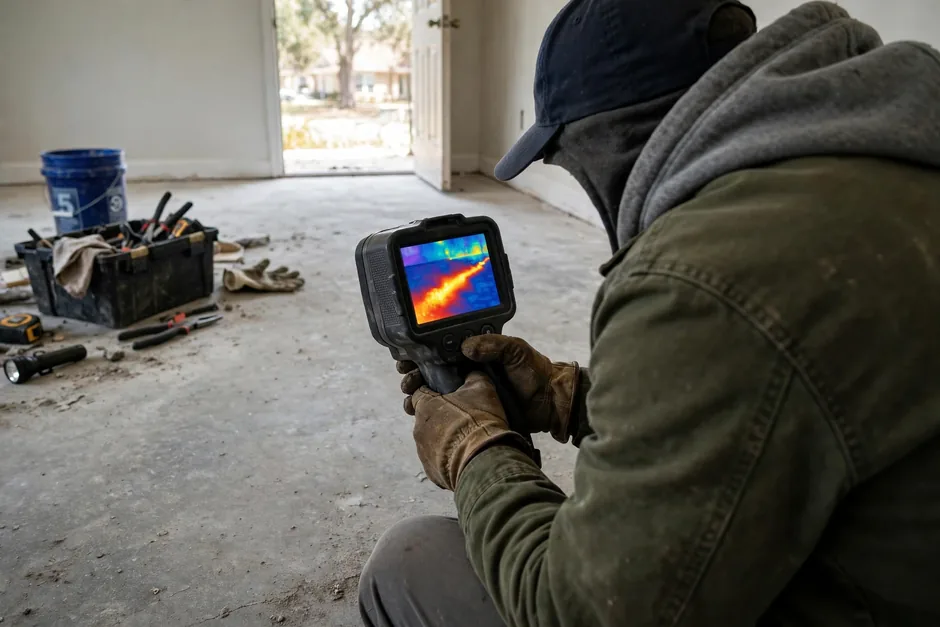
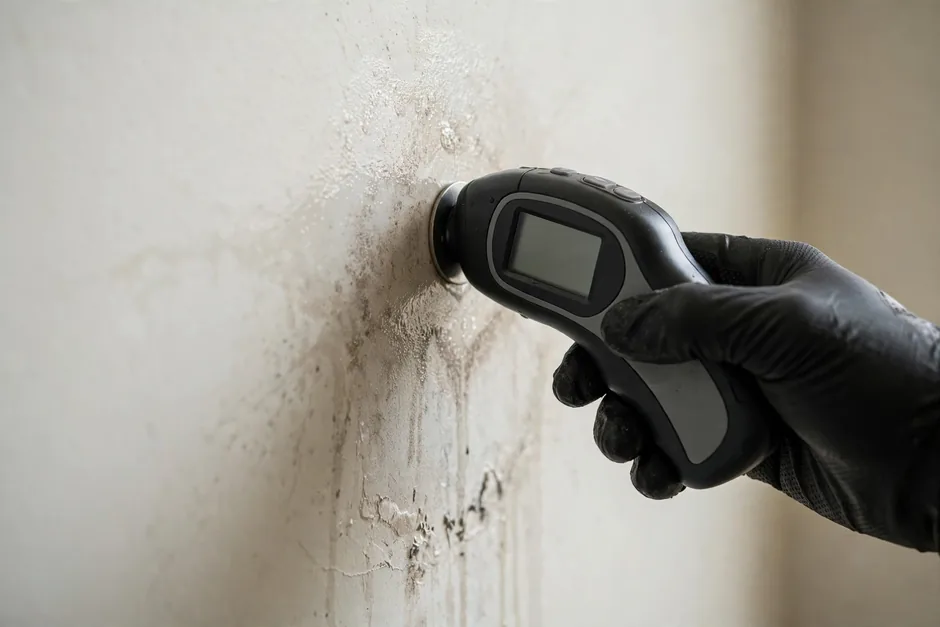
A professional finds hidden water with tools, not guesswork. Moisture meters read the water content of drywall, wood, and flooring without opening the wall. Thermal imaging shows the cooler patches where water has collected. And a careful inspection of the rooms above, below, and beside the stain narrows the source before any drywall comes down.
Our water damage restoration in Houston crews map the moisture first and open walls second. That order matters, because opening a wall in the wrong place creates damage that did not need to happen. If the source is a roof leak, roofing repairs the roof. If it is a pipe, plumbing repairs the pipe. Restoration deals with the water damage either one caused.
What to do when you find a sign
Do not paint over the stain. Paint traps moisture and hides the evidence, and the leak is still there. Do not ignore a musty smell because you cannot see the water. And do not open a wall yourself without knowing what is behind it: supply lines, wiring, and drain stacks all run through wall cavities, and a wrong cut makes the job bigger.
Photograph the stain or the damage, note when it first appeared, and call for help. Structural drying and dehumidification in Houston starts with finding all of the water, including the water you cannot see, and drying it with monitoring until the readings are dry.
Mold and the Texas rule
Hidden water and mold go together, because water that stays hidden stays wet. If mold is found behind a wall, the Texas rules apply. In Texas, mold remediation of 25 contiguous square feet or more requires a TDLR-licensed remediator, and the company that assesses the mold cannot remediate the same job. IICRC S500/S520 are industry standards, not law. Mold assessment is a separate licensed activity from remediation, and mold inspection and testing are not the same as remediation.
There is no safe level of mold in the Texas rules. What matters is finding the water, fixing the source, removing the material that cannot be dried, and verifying the work with a clearance step done by the assessor. Our mold remediation in Houston page explains how the two roles are kept separate.
Frequently Asked Questions
What are the signs of hidden water damage behind walls?
Bubbling or peeling paint, baseboards pulling away from the wall, drywall that feels soft or cool, a musty smell that returns after cleaning, and brown stains that grow after rain or appear for no clear reason.
How do you find a water leak behind a wall?
With moisture meters, thermal imaging, and a careful inspection of the rooms above, below, and beside the stain. A water meter that moves when every tap is off is also a strong sign of a hidden supply leak.
Why does hidden water damage happen so often in Houston?
Most Houston homes are slab-on-grade, so leaks under the slab have nowhere visible to go. Expansive Houston Black and Beaumont clays flex slabs and stress buried copper lines, and older inner-loop homes hide leaks in wall cavities and crawl spaces.
Can hidden water damage cause mold?
Yes. Water that stays hidden stays wet, and wet material is where mold takes hold. If mold is found, the Texas rules apply: remediation of 25 contiguous square feet or more requires a TDLR-licensed remediator, and the assessor and remediator must be separate.
Should I open the wall myself to find the leak?
No. Supply lines, wiring, and drain stacks run through wall cavities, and a wrong cut makes the job bigger. Photograph the signs, note when they appeared, and call a professional who can map the moisture first and open the wall second.
Signs of hidden water damage in your Houston home
Do not paint over the stain and hope it goes away. Call Restoration Enterprise at (346) 980-0009. We find the hidden water, trace it to the source, and dry the structure properly.
Sources
Sources for the rules and figures cited in this guide.
- ANSI/IICRC S500 — Standard for Professional Water Damage Restoration — the industry standard for professional water damage restoration.
- Texas Department of Licensing and Regulation — Mold Remediation: Frequently Asked Questions — the Texas mold-remediation rules, including the 25-contiguous-square-feet threshold and the rule that the company that assesses the mold cannot remediate the same job.