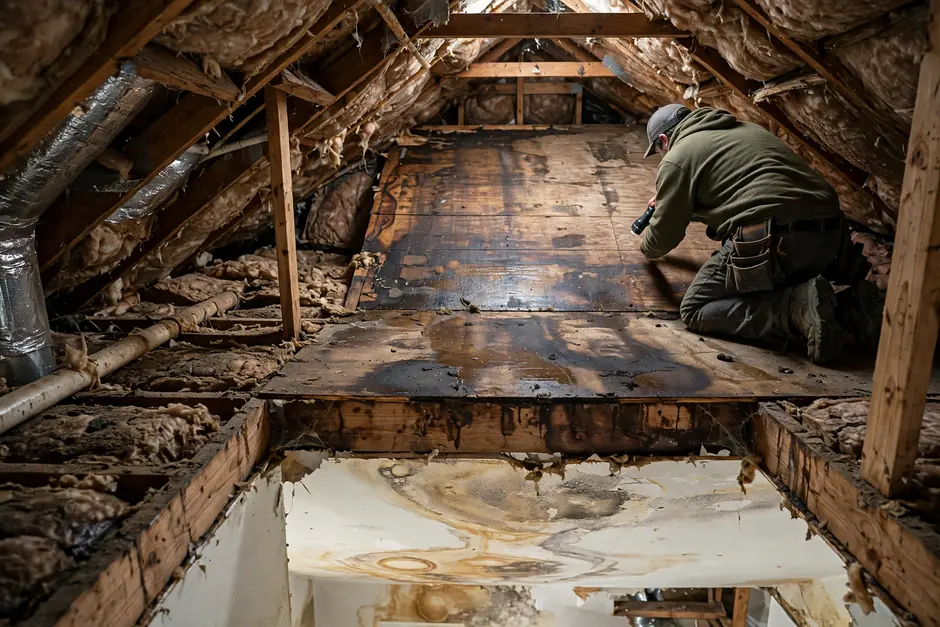
Why Is My Hardwood Floor Buckling After a Leak in Houston
A hardwood floor that buckles after a leak is not warping for no reason. The wood is swelling because it has taken on water, and it is swelling unevenly because the water reached the bottom of the boards before the top. Here is why it happens, what the different shapes mean, and when a floor can be saved.
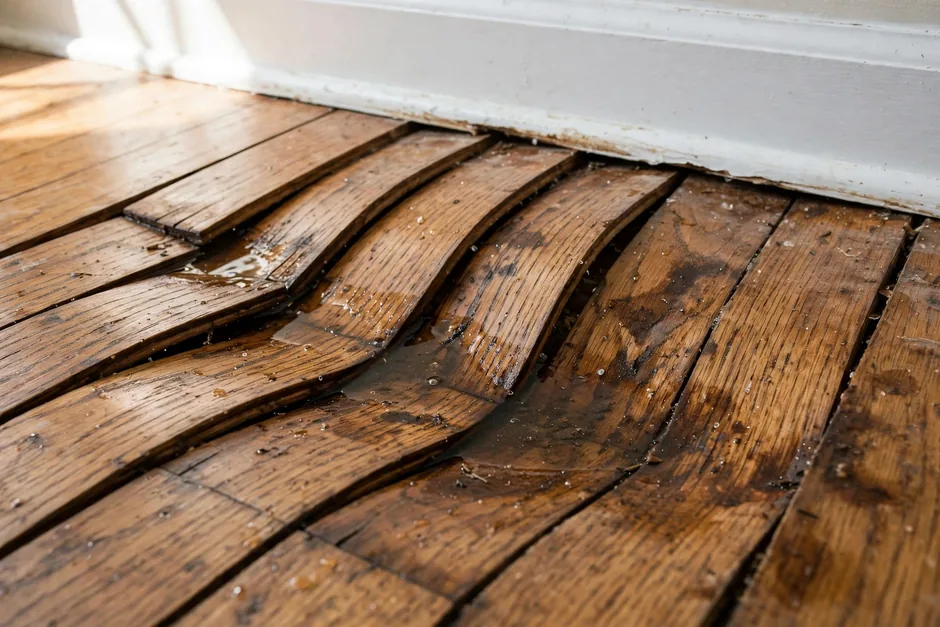
A hardwood floor that buckles after a leak is not warping for no reason. The wood is swelling because it has taken on water, and it is swelling unevenly because the water reached the bottom of the boards before the top. Here is why it happens, what the different shapes mean, and when a floor can be saved.
Why wood buckles: water from below
Hardwood swells when it absorbs water, and it shrinks when it dries. A leak that wets the floor from above is bad enough, but most buckling starts from below: water that has run under the boards, soaked into the subfloor, and been absorbed by the underside of the wood. The bottom swells while the top stays drier, and the board cups upward at the edges. That is cupping, and it is the most common shape after a leak.
When the top of the board swells more than the bottom, the center of the board rises. That is crowning, and it usually means the floor was sanded or dried unevenly, or the top was wetted after the bottom had already dried. Buckling is the severe form: the boards lift off the subfloor entirely, often in a tent shape, because the wood has expanded more than the room allows. In Houston's slab homes, water that gets under hardwood sits on the concrete and has nowhere to drain, so the boards keep absorbing it.
The usual causes in Houston homes
The most common causes are a supply-line leak, a slab leak, a roof leak that runs down a wall and under the floor, and a dishwasher or refrigerator line that has been weeping for weeks. The slow leaks are the worst, because the wood has been absorbing water for a long time before anyone notices. A floor that buckles suddenly after a visible leak is at least a known problem. A floor that cups gradually over a month is a leak that has been running unnoticed.
Our slab leak water damage in Houston work often starts with a buckling floor. Houston Black and Beaumont clays flex slabs with the wet and dry cycle, stressing the copper lines buried beneath them, and a pinhole leak under the slab can wet a floor for weeks before the water shows anywhere else.
Can a buckled floor be saved
Sometimes. A floor that has cupped but not buckled can often be saved by drying it properly and letting it settle. The drying has to reach the underside of the boards and the subfloor, not just the surface, and the floor has to be given time to return to its normal moisture level before any sanding or refinishing. Sanding a cupped floor while it is still wet removes wood from the high edges, and when the floor dries it crowns in the other direction.
A floor that has buckled off the subfloor, or a floor where the boards have split, cracked, or separated at the joints, is usually beyond saving in the affected area. Those boards have to be replaced, and the subfloor underneath has to be dried and checked before new boards go down. In Willow Meadows, where many homes have hardwood over slab, the drying step decides whether the floor is a repair or a replacement.
How professional drying works for hardwood
Hardwood is one of the deeply saturated materials that needs specialty drying. The industry calls it Class 4 specialty drying, and it matters most for Houston's slab and masonry construction, where water sits in concrete and wood far longer than in drywall. Drying uses air movers and dehumidifiers, with moisture meters tracking the readings in the boards and the subfloor until they are dry.
Structural drying and dehumidification in Houston for hardwood is measured, not guessed. The crew takes readings in the affected boards and in dry boards nearby for comparison, and keeps drying until the affected readings return to dry. Drying time depends on the amount of water, the wood species, and the subfloor, so no honest answer gives a fixed number of days in advance.
What not to do with a buckled floor
Do not sand a buckled or cupped floor while it is still wet. Do not run a heater directly on the boards to dry them faster, which cracks the wood. Do not nail down boards that have lifted, which traps moisture underneath. And do not cover a buckled floor with a rug and hope it settles. It will not settle until it is dry, and it will not dry properly without equipment and monitoring.
If mold is found under the floor, the Texas rules apply. In Texas, mold remediation of 25 contiguous square feet or more requires a TDLR-licensed remediator, and the company that assesses the mold cannot remediate the same job. IICRC S500/S520 are industry standards, not law. Mold assessment is a separate licensed activity from remediation.
After the floor is dry
Once the readings are dry, the floor needs time to settle before any refinishing. A floor that has cupped may flatten as it dries, and the flattening can take weeks. A refinisher should not touch the floor until the moisture readings are stable and the boards have stopped moving. If boards need to be replaced, the new boards should be acclimated to the home before they are installed, or they will move again as they adjust to Houston's humidity.
Our water damage restoration in Houston work ends when the floor is dry and verified, not when it looks dry. That verification is what makes the refinishing last.
Frequently Asked Questions
Why is my hardwood floor buckling after a leak?
The wood has absorbed water, usually from below, and swollen unevenly. The bottom of the board swells while the top stays drier, so the board cups upward at the edges. Severe swelling lifts the boards off the subfloor entirely, which is buckling.
Can a buckled hardwood floor be saved?
Sometimes. A floor that has cupped but not buckled can often be saved by drying it properly and letting it settle. A floor that has buckled off the subfloor, or where boards have split or separated, usually needs the affected boards replaced.
How do you dry a buckled hardwood floor?
With air movers and dehumidifiers, tracking moisture readings in the boards and the subfloor until they are dry. Hardwood is a deeply saturated material that needs specialty drying, and the readings decide when the floor is dry, not a calendar.
Should I sand a cupped hardwood floor?
Not while it is still wet. Sanding a cupped floor removes wood from the high edges, and when the floor dries it crowns in the other direction. Let the floor dry fully and settle before any sanding or refinishing.
What causes hardwood floors to buckle in Houston?
The usual causes are a supply-line leak, a slab leak, a roof leak that runs under the floor, or an appliance line that has been weeping for weeks. In Houston's slab homes, water under hardwood sits on the concrete and keeps being absorbed by the boards.
Hardwood floor buckling after a leak in Houston
Do not sand it wet and do not cover it up. Call Restoration Enterprise at (346) 980-0009. We dry the boards and the subfloor, measure the moisture until it is dry, and tell you honestly whether the floor can be saved.
Sources
Sources for the rules and figures cited in this guide.
- ANSI/IICRC S500 — Standard for Professional Water Damage Restoration — the industry standard for professional water damage restoration.
- IICRC — Standards — the IICRC standards library, including S500 and S520.