Why Is Water Leaking From My Ceiling in Houston
A ceiling leak in Houston usually comes from a roof failure, a plumbing line above the ceiling, or AC condensation. Here is how to find the source, what to do in the first hour, and when to call for help.
A ceiling leak in Houston usually comes from a roof failure, a plumbing line above the ceiling, or AC condensation. Here is how to find the source, what to do in the first hour, and when to call for help.
The short answer: why your ceiling is leaking in Houston
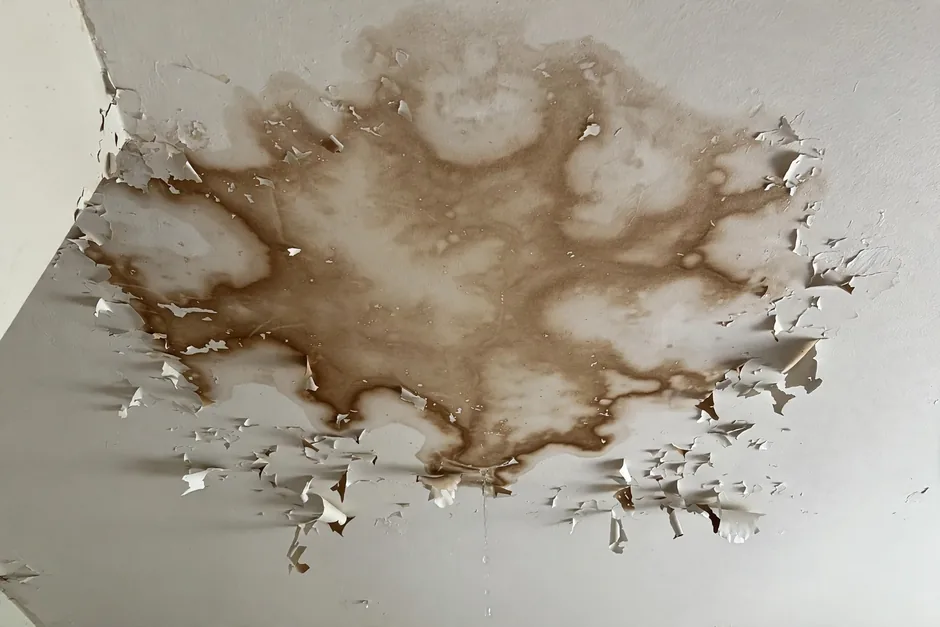
Ceiling leaks in Houston fall into two groups: water coming from outside the house, through the roof, flashing, windows, or siding, and water coming from inside the house, through supply lines, drain lines, or the AC condensate system. The location of the stain and the timing of the leak tell you which group you are in. A stain that grows only during rain points to the roof. A stain that appears whether it is raining or not points to plumbing or the AC.
Houston's climate makes both groups worse. Heavy rain arrives in intense bursts that find every weak point in a roof, and the same humidity that keeps AC systems running for much of the year produces a steady flow of condensate that has to drain away somewhere. When a drain line clogs or a pan rusts through, that water ends up in the ceiling.
The most common causes of ceiling leaks in Houston
Roof leaks are the most common cause. A missing shingle, a cracked pipe boot, or failed flashing around a chimney or skylight lets water in during the next storm, and the stain often shows up far from the actual leak because water travels along rafters before it drips. Our roof leak water damage repair in Houston work starts with that fact: roofing repairs the roof, and restoration deals with the interior water damage the leak caused.
Plumbing leaks above the ceiling are the second most common cause, and the fastest to do damage. A supply line can spray water into a ceiling cavity, and a drain line can weep steadily for days. Upstairs bathrooms are the usual suspects: a failed toilet supply line, a cracked shower drain, or a loose tub overflow gasket will all send water into the ceiling below.
AC condensate is the third. On a hot Houston day, an AC system produces a large volume of condensate, and that water is supposed to drain away through a PVC line. Algae, dust, and sludge clog those lines constantly. When the line clogs, the drain pan fills and overflows into the ceiling below the air handler. If your leak is near the indoor unit and worse on hot days, suspect the condensate line first.
Clogged gutters are a quieter cause. A gutter full of leaves backs water up under the bottom row of shingles and into the fascia, which then travels into the ceiling near exterior walls. If your stain is within a few feet of an exterior wall, check the gutters on that side. In Upper Kirby, where mature oaks overhang many roofs, gutter debris is a year-round problem rather than a seasonal one.
How to find the source of a ceiling leak in Houston
Finding the source starts with three questions: when does it leak, where is the stain, and what is above it? Only during rain means roof or exterior. All the time or randomly means plumbing. Only when the AC runs means condensate. Near an exterior wall points to roof, gutter, or window. Near a bathroom or kitchen points to plumbing. Near the air handler points to the AC.
If you can safely access the attic, look for water trails on the rafters, wet insulation, or staining on the roof deck. A bright flashlight and a dry day will tell you more than any gadget. If the attic is dry but the ceiling is wet, the leak is in the plumbing or AC system inside the ceiling cavity, and a moisture meter will trace it. One Houston-specific note: after a hard rain, water can enter at the roof and travel a long way along a rafter before dripping. Do not assume the leak is directly above the stain. Trace uphill from the wet spot.
What to do when water leaks from your ceiling
When water leaks from your ceiling, the first hour matters more than anything you do afterward. Move furniture and electronics out of the way. If the ceiling is bulging or the light fixtures are wet, switch off the breaker for that room. Water and electricity are a dangerous combination, and a bulging ceiling is a ceiling that may come down.
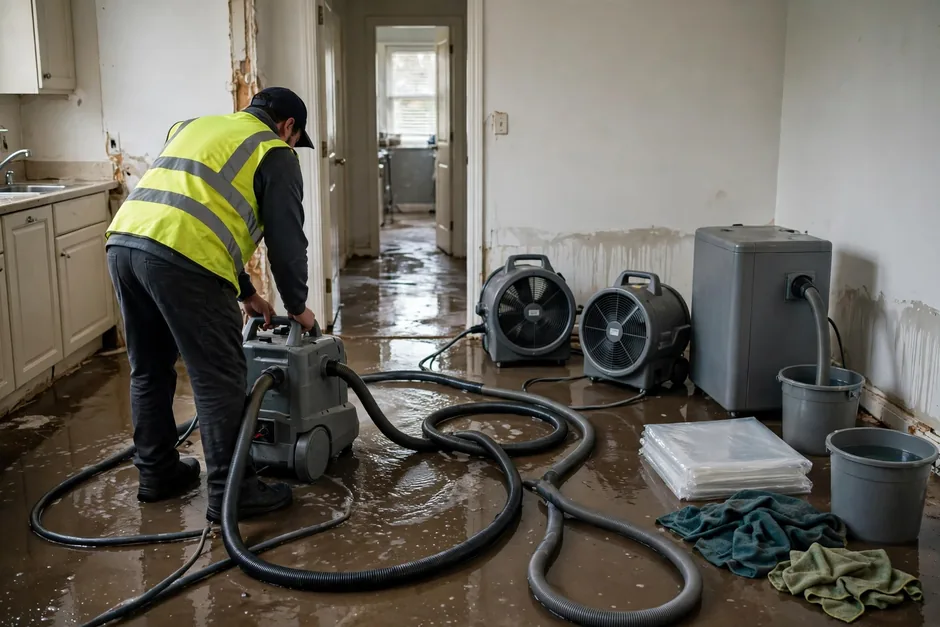
Contain the water with buckets, towels, and a wet and dry vacuum. If the ceiling is bulging, a small hole in the center of the bulge lets the water drain in a controlled way, which is better than a sudden collapse. If the leak is not rain-related, shut off the main water valve. Then call for help. Our emergency water extraction in Houston team removes the water, dries the structure, and checks the ceiling cavity with moisture meters before any repair starts.
Common mistakes to avoid with a ceiling leak
Do not paint over the stain. Paint traps moisture and hides the evidence, and the leak is still there. Do not ignore a slow drip, because a drip that looks minor can add up to a large volume of water over a day, and that water is sitting in the ceiling cavity. Do not assume the roof is the problem without checking. Homeowners have paid for a new roof when the actual leak was a toilet supply line. Diagnose first, repair second.
Do not skip the drying step. Fixing the leak is half the job. If the ceiling cavity and insulation stay wet, mold will follow, and the stain will come back. If mold is found in the ceiling, the Texas rules apply. In Texas, mold remediation of 25 contiguous square feet or more requires a TDLR-licensed remediator, and the company that assesses the mold cannot remediate the same job. IICRC S500/S520 are industry standards, not law. Mold assessment is a separate licensed activity from remediation.
When to call a professional
Call a professional when the leak is more than a slow drip, when you cannot find the source, when the ceiling is bulging or sagging, or when the water has been running for more than a day. Those are the situations where waiting turns a drying job into a remediation and rebuild job.
Our water damage restoration in Houston work finds the source, stops the water, dries the structure, and repairs the ceiling. If you are not sure whether you need help, call anyway. A short phone conversation costs nothing, and a ceiling collapse costs a great deal.
Frequently Asked Questions
Why is water leaking from my ceiling in Houston?
The most common causes are roof leaks from storm damage or failed flashing, plumbing leaks in supply or drain lines above the ceiling, and AC condensate line clogs. Houston's heavy rain and long AC season make all three frequent. Check whether the leak happens only during rain, which points to the roof.
Is a ceiling leak an emergency in Houston?
Yes. A ceiling leak should be treated as urgent, because wet drywall can collapse and wet material that stays wet grows mold. Shut off the water or the power if needed, contain the drip, and call a restoration company promptly.
How do I find the source of a ceiling leak in Houston?
Start with timing and location. If it leaks only during rain, suspect the roof or exterior walls. If it leaks randomly, suspect plumbing. If it leaks when the AC runs, suspect the condensate line. Check the attic above the stain for water trails, then trace uphill, since water travels along rafters before it drips.
Can a ceiling leak cause mold in Houston?
Yes. Wet drywall and insulation in a ceiling cavity can grow mold if they stay wet. If mold is found, the Texas rules apply: remediation of 25 contiguous square feet or more requires a TDLR-licensed remediator, and the assessor and remediator must be separate.
Who fixes a ceiling leak: a roofer or a plumber?
It depends on the source. Roofing repairs the roof, plumbing repairs the pipe, and restoration deals with the interior water damage either one caused. Diagnose the source first, then call the right trade for the repair and a restoration crew for the drying.
Water leaking from your ceiling in Houston
A ceiling leak never gets better by waiting. Call Restoration Enterprise at (346) 980-0009. We find the source, stop the water, dry the structure, and repair the ceiling.
Sources
Sources for the rules and figures cited in this guide.
- ANSI/IICRC S500 — Standard for Professional Water Damage Restoration — the industry standard for professional water damage restoration.
- Texas Department of Insurance — When Are Water Damage and Mold Covered by Insurance? — how Texas homeowners policies treat water damage and mold claims.